.png)
Seattle Now & Then: Hitt Fireworks Co., 1911
Published in The Seattle Times online on Oct. 9, 2025, Seattle Then & Now Blog on Oct. 9, 2025, and in Pacific NW Magazine of the printed Times on Oct. 12, 2025.
Explosive legacy underlies Rainier Valley’s serene hilltop park
By Clay Eals

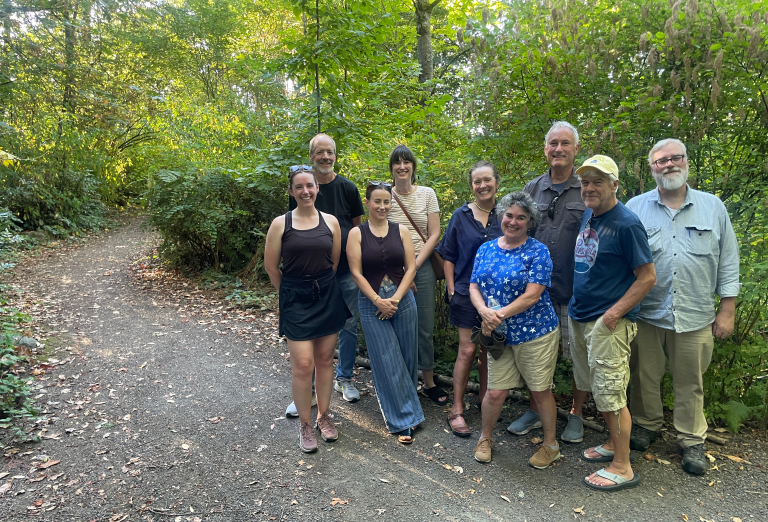
In this age of political pyrotechnics, what could be more welcome than a compact, peaceful park with a trail that winds through tall trees and native plants?
Inside this blufftop preserve we find no evidence, other than its namesake, that it once hosted an anything-but-tranquil fireworks factory that produced flares and explosions seen, heard and renowned the world over.

We are in the Columbia City neighborhood at Hitt’s Hill Park, named for Thomas Gabriel (T.G.) Hitt (1874-1958). An immigrant chemist from London by way of Victoria, B.C., he parlayed a childhood fascination for things that go boom into an international business based atop Rainier Valley’s highest slope.
In 1905, two years before Columbia City joined Seattle, Hitt Fireworks Co. took shape in what became 26 tarpapered shacks, each hand-numbered in red on galvanized grey signs, and spaced several yards from each other to prevent manufacturing accidents from obliterating the whole lot.
A frequent overseas traveler to negotiate deals, Hitt employed up to 200 people on his hill.
Products ranged from panoramic set pieces for the 1909 Alaska-Yukon-Pacific Exposition and other prominent fetes around the country to extra-loud “Flashcrackas” and other novelties that fit in the palm of a hand.


His craftsmanship also bolstered Oscar-winning Hollywood films, in the war scenes of “All Quiet on the Western Front” (1930) and the burning-of-Atlanta sequence of “Gone with the Wind” (1939).

Not all was safe and sane, however.
Fiery onsite calamities occasionally made banner news, especially when on May 8, 1922, exploding powder killed 17-year-old employee Nora Bailey. One day later, the suicide of a same-aged female friend was attributed to her demise. Angry locals demanded the plant be banned from the city, but the city resisted, providing that Hitt obey fire-marshal regulations.
The heyday of Hitt, also a perfumer and inkmaker, started fading after his accidental arsenic poisoning in the 1930s, says great-grandson Ray Akers, but family continued the enterprise past his death into the 1970s. The company’s arc paralleled society’s love-hate relationship with fireworks, eventually resulting in Seattle banning their manufacture (and, later, their private use) and business moving abroad.
By century’s end, invasive ivy, blackberries and rats flourished onsite. Locals including Akers fought back plans for dozens of houses to be built on the 3.2-acre parcel. Open-space advocates successfully lobbied the city to make it a park and volunteered muscle and money to transform it into a natural refuge.
Today, the only major noise in the sanctuary comes from periodic jet overflights. The uninitiated would never suspect it once had been home to big bangs and fabricated flash.


Comments